
The story of the J.R.D. Tata Memorial Library is not just about a building filled with books; it is a narrative of intellectual growth, academic service, and the evolution of knowledge sharing at one of India’s premier institutions, Indian Institute of Science. Over more than a century, this library has transformed from a modest academic support unit into a vibrant, modern knowledge hub that continues to serve generations of students, researchers, and scholars.
About JRD Tata Memorial Library, Bengaluru, Karnataka
Founded in 1911, the library began its journey at a time when higher education and organized research facilities in India were still developing. In those early years, the establishment of a central library itself was a visionary step. It signaled a commitment to structured learning, access to information, and the creation of a scholarly environment where ideas could flourish. Initially housed within the institute’s iconic main building, the library was closely intertwined with the academic life of the campus. Scholars and faculty relied heavily on its carefully curated collection of books, journals, and reference materials, which were considered invaluable resources in an era when information was neither digitized nor easily accessible.
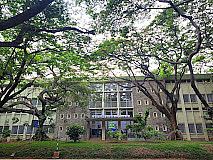
As the institute grew, so did the library’s role. It evolved from being merely a repository of books into a service oriented center that actively supported teaching and research. The expansion of academic disciplines, the rise in student enrollment, and the increasing complexity of scientific inquiry demanded a more sophisticated infrastructure. Recognizing this need, the institute took a significant step in 1965 by relocating the library to a new, dedicated building. This transition marked a turning point in the library’s history.
The new premises were made possible through generous financial assistance from the University Grants Commission (UGC), which supported the construction as part of the institute’s golden jubilee celebrations in 1959. The building itself was designed to accommodate the growing demands of a modern academic library. With spacious reading halls, dedicated reference sections, and improved storage facilities, the new location allowed the library to expand both its physical collection and its range of services.
Today, the library spans an impressive area of over 54,000 square feet and is centrally located within the campus, making it easily accessible to all departments. Its location reflects its importance it is not tucked away as a passive facility but stands at the heart of academic activity. The layout is thoughtfully designed to balance quiet study spaces with collaborative zones, ensuring that it caters to different learning styles and needs.
Services
Contact Information
Location Map
📍 Open in Google Maps / Get DirectionsFrequently Asked Questions
Reviews
Similar Businesses Nearby