
onetaplisting Logo
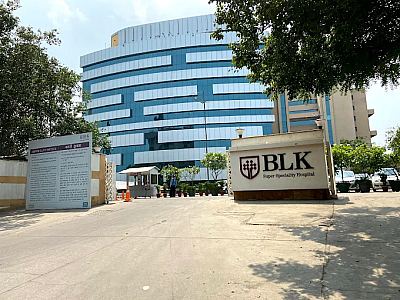
BLK-Max Super Speciality Hospital, Rajinder Nagar, New Delhi

BLK-Max Super Speciality Hospital, Rajinder Nagar, New Delhi

New Delhi , Delhi

BLK-Max Super Speciality Hospital in Delhi is recognized as one of the city’s foremost healthcare centers, offering advanced treatment in Oncology, Cardiology, Liver and Kidney Transplants, General Surgery, and several other specialties. As part of Max Healthcare, one of India’s largest hospital networks, it operates within a group of 22 facilities that house more than 5,000 beds. With over 5,000 skilled medical professionals and expertise across 84+ specialties, Max Healthcare extends its services across Delhi NCR, Haryana, Punjab, Uttarakhand, and Maharashtra. Combining world-class technology with compassionate care, the network is committed to delivering outstanding clinical results and setting high benchmarks in healthcare nationwide.

About Business

BLK-Max Super Speciality Hospital is a proud part of India’s largest healthcare network, delivering advanced tertiary care with compassion and precision. Spread across 6,50,000 sq. ft., the hospital houses 650 beds, including 162 critical care units, 22 modular operation theatres, and speciality-focused OPD blocks. With a team of over 1,500 healthcare professionals, 150 internationally acclaimed super specialists, and 300 medical experts, BLK-Max continues to set new benchmarks in patient care.

Recognized by the Joint Commission International (JCI), NABH, and NABL, the hospital stands as a symbol of trust and excellence in healthcare, providing world-class treatment with uncompromised quality and safety.

Our Core Values

Compassion
We believe in understanding our patients deeply, respecting their dignity, and responding with empathy. Every action we take is rooted in the belief that care should be both clinical and humane.

Excellence
Our passion drives us to go beyond expectations, striving for medical expertise of the highest standard. For us, excellence is not a milestone—it’s a continuous journey.

Efficiency
We focus on creating a seamless and responsive healing experience, where advanced technology meets precise, timely, and personalized care.

Consistency
By upholding our promises at every stage, we earn the trust of our patients. Consistency in care ensures long-lasting impact and credibility.

Our Journey & Milestones

2023: Became India’s first private hospital with a Dual Console Robotic Surgical System; launched the Centre for Advanced Sports Rehabilitation.

2022: Introduced cutting-edge robotic systems for joint replacement and spine surgery.

2019: Brought North India’s first Tomotherapy for cancer treatment, South Asia’s first Revolution Frontier CT Scan, and Signa Artist MRI.

2018: Launched Robotic Surgery Programme and received JCI accreditation.

2017: Successfully performed BLK’s first heart transplant.

2013: Achieved BLK’s first liver transplant.

2012: Conducted the hospital’s first kidney transplant.

2010: Earned NABH and NABL accreditations.

2009: Redeveloped into a 650-bed multi-super speciality hospital and performed the first bone marrow transplant.

1984: Celebrated Silver Jubilee, establishing itself as a premier institute in Delhi.

1959: Officially inaugurated by Prime Minister Pt. Jawaharlal Nehru.

1956: Dr. B.L. Kapur initiated the project to set up a 200-bed hospital in Delhi.

1947: Post-partition, set up a maternity hospital in Ludhiana.

1930: Founded as a charitable hospital in Lahore by Dr. B.L. Kapur, an eminent obstetrician and gynaecologist.

From its humble beginnings in 1930 to becoming one of India’s most trusted super speciality hospitals, BLK-Max continues to blend medical excellence with compassionate care—transforming lives every single day.

Services / Products

Biopsy Procedure

₹1,000.00

Overview A biopsy is a medical procedure where a small sample of tissue or cells is taken from the body for closer examination. It’s a minimally invasive test, usually performed by a radiologist or surgeon, and plays a vital role in diagnosing a wide range of conditions. Doctors recommend a biopsy when there are abnormal tissue changes such as swelling, ulcers, unusual growths, pigmentation, or cysts. It helps detect conditions like: Cancer Infections Inflammatory diseases Autoimmune disorders Lymphoproliferative disorders A biopsy can be performed on almost any part of the body depending on what needs to be examined. Types of Biopsies The choice of biopsy depends on the organ or tissue being tested and the reason for investigation: Shave biopsy – A thin layer of skin cells is scraped off to check moles or suspicious skin growths. Punch biopsy – A special tool is used to remove a deeper skin sample for testing. Excisional/Incisional biopsy – Performed with a scalpel to remove part (incisional) or the whole (excisional) lesion or growth. Needle biopsy – A thin needle extracts cells or fluid, often from tumors or internal organs. Endoscopic/Laparoscopic biopsy – An endoscope (a thin tube with a camera) is inserted through a small incision to view and collect tissue. Perioperative biopsy – Conducted during another surgical procedure. Bone marrow biopsy – A needle is inserted (usually into the hip bone) to take marrow samples for conditions like cancers or blood disorders. Preparation Before a Biopsy Your doctor will guide you through the preparation, which may include: Sharing your medical history, recent illnesses, or surgeries. Informing about ongoing medications or supplements (some may need to be paused). Reporting any drug allergies. Informing if you are pregnant, since certain procedures like endoscopy may not be advised. Discussing diet and fluid intake restrictions before the test. Before starting, the doctor will explain the procedure in detail to help you feel prepared and at ease. How a Biopsy is Performed Biopsies are generally simple and less invasive compared to surgeries. Many types, such as skin or needle biopsies, are done on an outpatient basis with local anesthesia. Some, like core needle or endoscopic biopsies, may require short hospital stays and mild sedation. Imaging tools such as ultrasound or CT scans are sometimes used to guide the needle for accuracy. Throughout the procedure, doctors keep patients informed to minimize anxiety. Recovery After Biopsy Recovery is usually quick since most biopsies are minimally invasive. Mild soreness or discomfort at the biopsy site is common for a couple of days. Your doctor may prescribe medication if needed. Recovery instructions depend on the type of biopsy performed. Follow-Up After Biopsy Once the biopsy sample is examined, your doctor will: Discuss the results with you. Create a treatment plan if needed. Schedule follow-up visits to monitor progress. If complications such as bleeding, infection, or unusual pain occur, immediate medical care is required. Risks Associated with Biopsy While generally safe, biopsies may have some risks: Minor bleeding or infection at the biopsy site. Discomfort or soreness for a few days. Rarely, injury to surrounding tissue. Larger or surgical biopsies may involve anesthesia-related risks. Frequently Asked Questions 1. Are biopsies done in hospitals? Yes, most biopsies are performed in hospitals or clinics by trained healthcare professionals. 2. What are the main types of biopsy? Needle biopsy, surgical biopsy, and excisional biopsy. 3. Is a biopsy a minor surgery? It depends. Needle and small skin biopsies are minor, while excisional biopsies may be more invasive. 4. Is a biopsy painful? Most are performed with local anesthesia, so discomfort is minimal. Some soreness may follow. 5. How long do biopsy results take? Results may take a few days to a week, depending on the test and lab. 6. What if my biopsy is positive? A positive result means abnormal or cancerous cells were found. Your doctor will discuss treatment options like surgery, radiation, or chemotherapy. 7. Does a biopsy remove the tumor? Not usually. It only removes a sample. In some cases, an excisional biopsy may remove the entire small lesion. 8. Can a biopsy fail? Though rare, false negatives may occur. Additional testing might be needed if symptoms persist. 9. Is a negative biopsy result good? Yes, it usually means no abnormal or cancerous cells were found in the sample. 10. Can I return to work after a biopsy? In most cases, yes. Recovery time depends on the type of biopsy and how you feel afterward.

Contact Information

Location Map

Reviews

No reviews yet.

Submit Your Review

Rating:

Related Listings