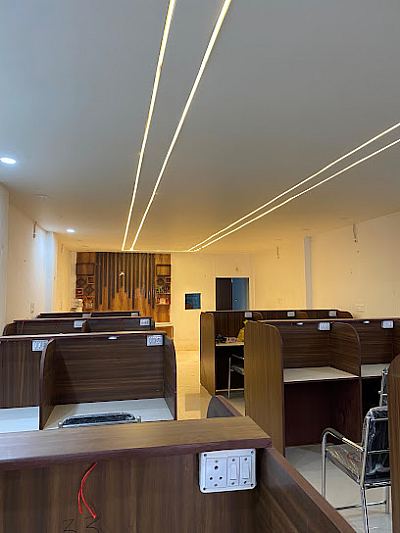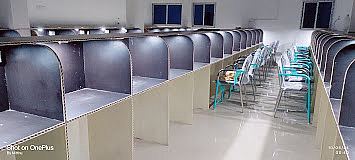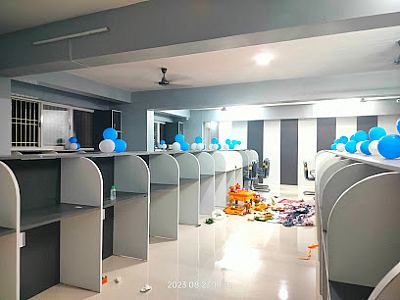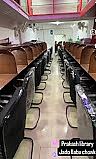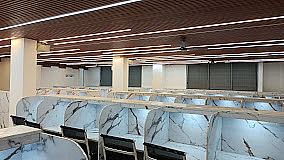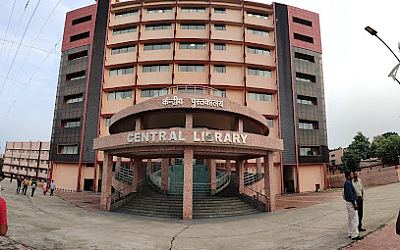

The Central Library of the Indian Institute of Technology (Indian School of Mines), Dhanbad, stands as one of the most vital academic infrastructures of the institute. It is not merely a building filled with books, but a dynamic knowledge hub that continuously supports teaching, learning, research, and innovation across all departments. Acting as the intellectual backbone of the institution, the library plays a central role in shaping the academic journey of students, researchers, and faculty members.
About Central Library, Dhanbad, Jharkhand
Over the years, the Central Library has evolved far beyond its traditional identity. From a conventional book issuing facility, it has transformed into a highly advanced, technology driven knowledge centre that integrates modern information systems with vast academic resources. Today, it functions as a seamless bridge between information seekers and global knowledge resources, ensuring that every member of the institute has uninterrupted access to high quality academic content.
A Knowledge Hub at the Core of Academic Life
The Central Library is strategically positioned at the heart of IIT (ISM) Dhanbad, symbolizing its importance in the academic ecosystem. Every department, whether engineering, science, management, or interdisciplinary research, depends on its services. Students rely on it for textbooks, reference materials, and digital resources, while researchers depend on its extensive journal collections, databases, and archival materials for advanced studies.
What makes this library particularly significant is its inclusive reach. It serves undergraduate students, postgraduate scholars, doctoral researchers, post doctoral fellows, and faculty members alike. Each category of user finds tailored support that aligns with their academic needs. Whether it is foundational learning or cutting edge research, the library ensures that information is available in the most efficient and accessible manner.
Fully Automated Library System
One of the most remarkable features of the Central Library is its complete automation. The library operates through an Integrated Library Management System (ILMS), which manages all its operations digitally. This includes acquisition, cataloguing, circulation, serial control, and user services.
The automation has significantly improved efficiency and transparency. Users can search for books, journals, and other resources through an online catalogue system without physically browsing shelves. The system enables real time tracking of issued and available materials, reducing waiting time and enhancing user satisfaction.
Every document in the library is bar coded, ensuring smooth and error free transactions. This bar coding system helps in quick issue and return of materials while maintaining accurate records. It also minimizes manual errors and enhances the overall reliability of library operations.
Services
Contact Information
Location Map
📍 Open in Google Maps / Get DirectionsFrequently Asked Questions
Reviews
Similar Businesses Nearby