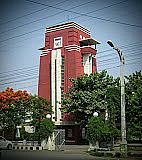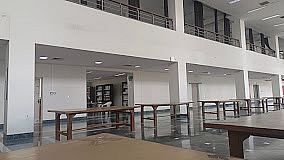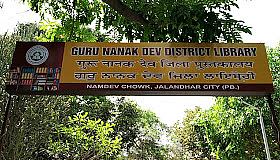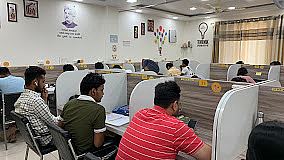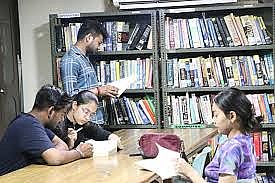

The college library has undergone a significant transformation over the past several years, evolving from a traditional, manually managed system into a fully automated and technology driven knowledge center. This change has not only improved the efficiency of library operations but has also enhanced the overall academic experience for students, faculty members, and researchers. Since the academic session 2017,2018, the library has been operating under a fully automated environment using an Integrated Library Management System (ILMS), marking a major milestone in its journey toward digital modernization.
About Mohindra College Library, Patiala, Punjab
Before the adoption of automation, most library activities such as cataloguing, issuing and returning of books, maintaining registers, and tracking user records were done manually. These traditional methods were time consuming and often prone to human error. With increasing academic demands and growing collections of books and journals, it became necessary to introduce a more efficient system that could handle large volumes of data while ensuring accuracy and speed.
The introduction of the Integrated Library Management System in the academic session 2017,2018 brought a revolutionary shift in the functioning of the library. ILMS enabled the library to digitize its core operations, making it easier to manage resources and serve users effectively. This system allowed librarians to maintain electronic records of books, manage circulation efficiently, and provide quick access to bibliographic information.
Evolution of ILMS Versions
Initially, the library implemented ILMS version 2.0, which served as the foundation for automated operations up to the academic session 2018 2019. This version helped streamline basic library functions such as cataloguing, circulation, and member management. It significantly reduced paperwork and improved the speed of service delivery.
However, as technology advanced and user expectations grew, the need for a more robust and feature rich system became apparent. Consequently, from the academic session 2019,2020 onward, the library upgraded to ILMS version 3.0. This newer version brought enhanced functionalities, improved user interface, better data management capabilities, and more reliable performance. It allowed for smoother integration of library processes and ensured greater efficiency in handling academic resources.
The upgraded system also improved search capabilities, enabling users to locate books and reference materials quickly. With better reporting tools and data analytics, the library staff could monitor usage patterns and make informed decisions regarding collection development and resource allocation.
Services
Contact Information
Location Map
📍 Open in Google Maps / Get DirectionsFrequently Asked Questions
Reviews
Similar Businesses Nearby